Looking for fresh-smelling air and a kitchen that meets EMAQ+ guidance?
Whether you’re involved in specifying commercial kitchens, installing kitchen equipment, or running a busy restaurant, air quality is a key concern.
As part of our service, our guide helps you exactly with this.
Step one: Site assessment
This first step is all about understanding the mechanics of the kitchen and how it operates. We survey the existing or proposed extract system, from the canopy and ductwork through to the fan and discharge point, and gather information on a number of critical factors. These include the extract volume, the height and position of the discharge point, and how close the nearest neighbours are. We also look at the likely sensitivity of the neighbourhood to odour problems, and establish the scale of the operation: how many hours is the kitchen open at a time, and how many covers does it typically serve?
This information feeds into an odour risk assessment based on EMAQ+ guidance, which replaced DEFRA’s 2005 guidance on kitchen odour. The assessment scores the kitchen on factors such as how well the discharge disperses, how close the nearest homes and businesses (known as ‘receptors’) are, the size of the kitchen and the type of cooking. The result tells you whether your kitchen needs a low to medium, high or very high level of odour control, and that shapes every step that follows.
Step two: Defining cooking activity
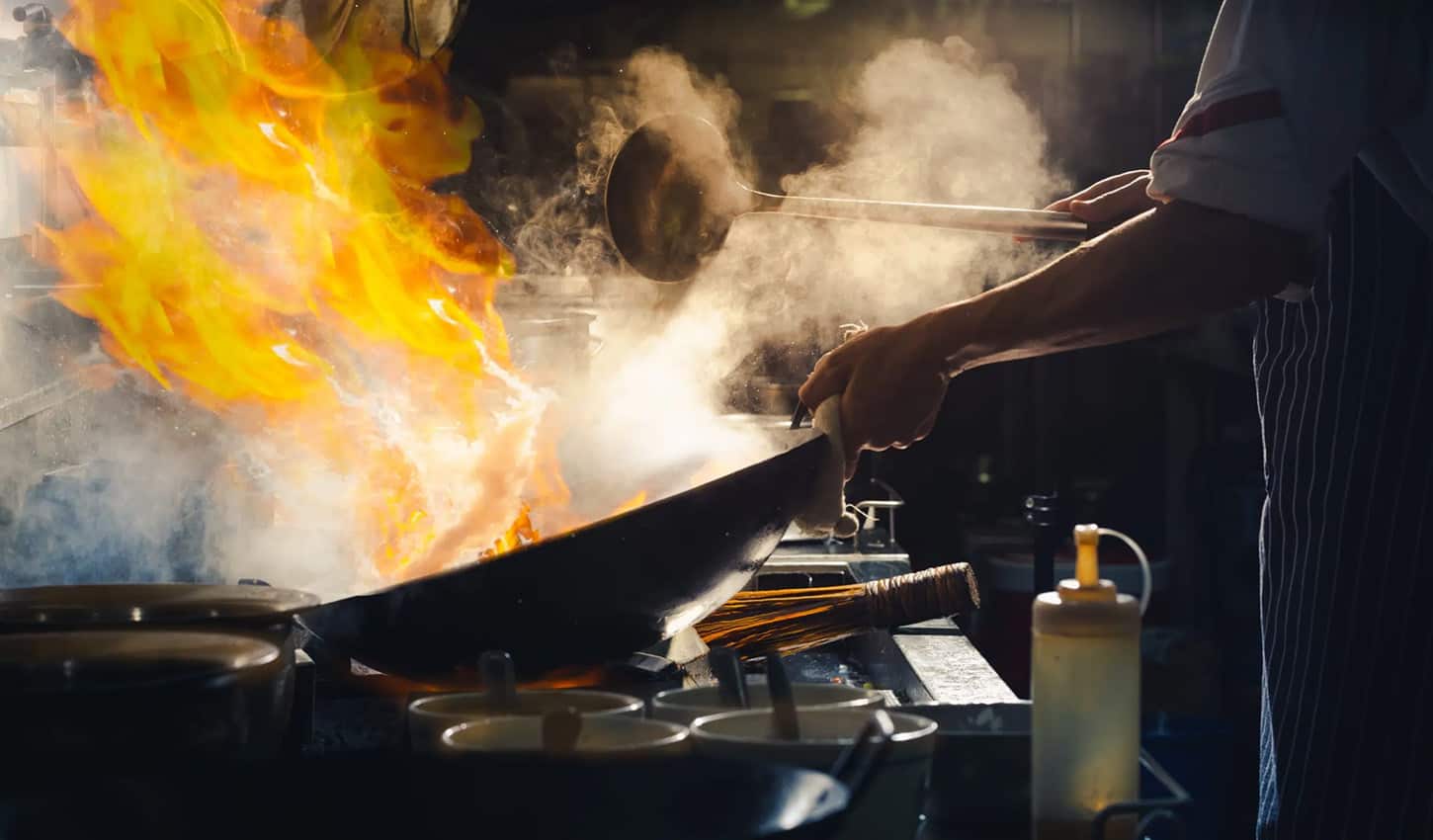
We next look at the type of cooking. Different types of cooking produce different levels of grease, smoke and odour. A fish and chip shop, for example, produces high levels of grease, very high levels of odour, and low levels of smoke. A gastro-pub cooking steaks on a chargrill, on the other hand, produces high levels of grease, smoke and odour. To be effective, systems have to take these differences into account.
We review the menu, the cooking equipment in use (such as fryers, chargrills, woks and solid fuel ovens) and how busy the kitchen gets at peak times. Cooking type is one of the factors in the EMAQ+ risk assessment, so getting it right at this stage avoids under-specifying the system, which is a common cause of odour complaints once a kitchen is trading. If your menu is likely to change, tell us now. A switch to char-grilling can turn a manageable kitchen into a very high-risk one, as one restaurant we worked with discovered.
Step three: Choosing the right solution
Assessment complete, we select the combination of solutions from our range that will best keep the kitchen and neighbouring areas grease, smoke and odour free.
Most kitchens need a staged approach, with each stage protecting the next:
- Grease control at the canopy: high-efficiency grease filters such as Ecofleece capture grease before it enters the ductwork.
- Grease and smoke control: an Electro-clean electrostatic precipitator (ESP) removes fine grease and smoke particles from the airstream.
- Odour control: UV and ozone systems such as Techni-clean UV and the Xtract range break down cooking odours within the extract system.
- Final polish: Carb-clean activated carbon absorbs remaining odour and any residual ozone before the air is discharged.
The higher the risk score, the more stages are usually needed. A lower-risk kitchen may need fewer stages, while a very high-risk chargrill restaurant with neighbours directly above will typically need the full combination.
Step four: Specifying the solution
Using volume flow rates, we calculate the correct configuration of solutions required for best results and confirm where they should go. Our range is modular, meaning we can plug things together to give different options and strengths. At this point, we can also produce a grease, smoke and odour control strategy to show EHOs and Planning Officers you have an effective plan in place.
We also look at how the new equipment will affect the rest of the system. That means keeping any additional pressure drop as low as possible so the existing fan can cope, and making sure there is space and access for servicing. The strategy sets out the risk assessment result and the equipment chosen, so it can support a planning application or a response to an Environmental Health enquiry.
Step five: Installation
All products are designed to be easy to install and use. If we are kitting out a brand new kitchen, then installation is quick and straightforward. Our solutions can also be easily retrofitted into existing extract systems, often with minimal disruption to trading.
Every system we install includes a commissioning visit to make sure it is operating at 100% from day one. Where existing ductwork has no safe way in for inspection and cleaning, we can also carry out access door installation at the same time. Find out more about installing kitchen filtration equipment to maximise performance.
Step six: Maintenance
Maintenance requirements vary from solution to solution but are all simple and straightforward. In fact, our carefully designed and robust products typically need fewer routine service visits than competitor ranges. We’ll put together a schedule for you, advise staff what to do, and explain what you’ll need us to do.
Regular servicing keeps the system performing as it did on day one. Grease filters load up, ESP cells collect grease and smoke, and UV lamps, ozone cells and carbon all lose effectiveness over time. EMAQ+ also expects odour control equipment to be properly maintained, so a documented service history helps if your kitchen is ever investigated. Our service and maintenance programmes cover odour control equipment servicing, ESP servicing, ESP grease filter maintenance and TR19 canopy and extract cleaning, all under one plan.
Contact us and we will send you the 6 steps guide today, or call 0800 652 3325 to arrange a free site assessment.
Get In Touch
Please leave your information and our team will contact you shortly!